Sleep
Waking at three in the morning
Middle-of-the-night waking has specific causes and a specific set of unhelpful responses, most of which people do automatically.
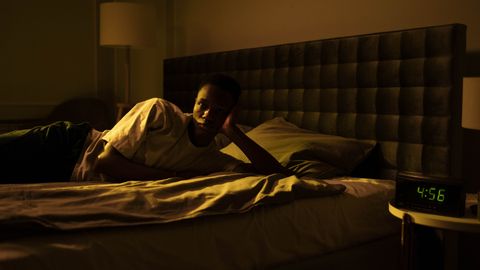
Waking in the early hours and being unable to return to sleep is among the most common sleep complaints, and it feels different from difficulty falling asleep because it usually is.
Why waking itself is normal
Brief awakenings occur many times a night in everyone, mostly at transitions between sleep cycles, and are usually not remembered.
Sleep in the second half of the night is lighter, with less slow-wave sleep and more REM, which makes waking more likely and more memorable.
Which means the waking is generally not the problem — the problem is what happens next.
The physiological contributors
Cortisol begins rising in the early hours as part of the normal awakening response, and is one reason why three or four in the morning feels alert and anxious rather than sleepy.
Core temperature reaches its minimum around this time, then begins rising.
Alcohol metabolised earlier in the night produces rebound arousal at exactly this point, which is why a drinker's waking is so reliably timed.
Blood glucose fluctuation may contribute in some people.
And in perimenopause and menopause, night sweats frequently cause the waking directly.
The causes worth checking
Because early waking is a signal in several conditions.
Depression classically causes early morning waking with inability to return to sleep, and if it is accompanied by low mood, loss of interest and appetite change it should be raised.
Sleep apnoea produces waking, frequently with a dry mouth, and is a leading cause.
Nocturia — waking to pass urine — may be bladder, prostate, cardiac or apnoea-related, and the question of whether the bladder woke you or you noticed it after waking is diagnostically useful.
Pain and reflux.
Restless legs, which peaks in the evening and disturbs the early night more than the late.
Medication timing, including diuretics and stimulants.
And an advanced body clock, which is common with age and produces early sleepiness and early waking that is not insomnia at all.
What people do that makes it worse
Almost everything that comes naturally.
Looking at the clock, which converts wakefulness into arithmetic about how much sleep remains and how bad tomorrow will be.
Staying in bed trying to sleep, which associates the bed with effort and frustration.
Calculating.
Checking a phone, which provides light, engagement and frequently something to worry about.
Worrying about the consequences of not sleeping, which is the single most effective way to guarantee not sleeping.
And catastrophising about the pattern — concluding that this is now what happens — which converts a run of bad nights into a self-fulfilling expectation.
What actually helps in the moment
The evidence-based version is counterintuitive.
Remove the clock from view before going to bed, permanently.
If awake for what feels like a prolonged period and not sleepy, get up and leave the bedroom.
Do something quiet, dim and undemanding — reading something dull on paper in low light is the standard suggestion for good reason.
Return when sleepy, not when tired of being up.
Keep the lighting very low, since bright light at this hour shifts the body clock earlier and reinforces the pattern.
And accept the wakefulness rather than fighting it, since the fighting is the arousal.
What helps over weeks
Fix the wake time, every day, regardless of the night — this is the single most powerful intervention and the one people abandon first.
Do not compensate by going to bed earlier, which reduces sleep pressure and makes fragmentation worse.
Reduce time in bed to approximately the time actually spent asleep, which is the sleep restriction component of insomnia treatment and is highly effective.
Address alcohol.
Deal with worry during the day rather than at night, using a designated worry period as described elsewhere on this site.
And get bright light in the morning, which strengthens the rhythm.
The reframe that helps most
Two facts that reduce the distress considerably.
The first is that segmented sleep — a period of wakefulness between two sleeps — appears to have been common historically and is not inherently pathological.
The second is that the consequences of a bad night are almost always overestimated at three in the morning, and that people function adequately on far less sleep than the catastrophic prediction suggests.
Which does not make it pleasant, and does remove the layer of alarm that is usually what keeps the person awake.
General information only, not medical advice. Consult a qualified clinician about persistent night waking, particularly with low mood, snoring or frequent urination.
Also by Tom Halvorsen
- The mental health of men, specificallyStress & Mood
- Getting to sleep when your mind will not stopSleep
- Sleep and the working weekSleep
- What exercise does for the mindStress & Mood