Sleep
Insomnia, and why sleep hygiene rarely fixes it
The standard advice is not wrong, it is simply not a treatment — and there is a treatment.
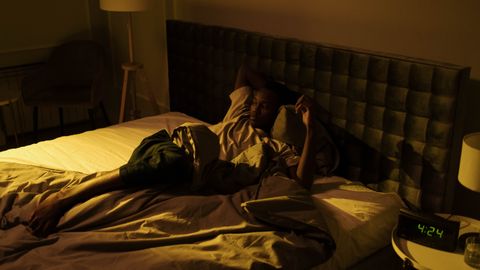
People with chronic insomnia have usually read the sleep hygiene list many times, follow most of it, and still lie awake — which produces the reasonable conclusion that nothing works.
What sleep hygiene is and is not
Sleep hygiene describes sensible habits: a consistent schedule, a dark cool room, limiting caffeine and alcohol, reducing screens late, not eating heavily before bed.
These are genuinely helpful for ordinary poor sleep and for preventing problems.
What the evidence consistently shows is that sleep hygiene alone is not an effective treatment for chronic insomnia disorder, and trials repeatedly find it performing barely better than doing nothing when used on its own.
Which is why being handed the leaflet for the fifth time is so demoralising, and why the person handing it over should be offering something else.
What insomnia actually is
Difficulty falling asleep, staying asleep or waking too early, occurring several nights a week, for three months or more, with daytime consequences.
The important part is what maintains it, which is generally different from what started it.
A stressful period causes poor sleep; the poor sleep produces anxiety about sleep; the anxiety produces effort; and effort is incompatible with sleep, which is a physiological process that cannot be performed deliberately.
Then compensations begin — going to bed earlier, lying in, napping, cancelling plans — which spread a reduced amount of sleep across a longer period in bed, weakening the association between the bed and sleeping.
By this point the original stressor may be long gone and the insomnia is self-sustaining.
The treatment that works
Cognitive behavioural therapy for insomnia is recommended as first-line treatment by major clinical guidelines in several countries, ahead of medication.
Its components are specific and, notably, several of them are the opposite of what exhausted people naturally do.
Sleep restriction, which is the most effective and least popular element: reducing time in bed to approximately the time actually spent asleep, then extending it gradually as sleep consolidates.
It builds sleep pressure and rebuilds the bed–sleep association, and it makes people feel worse for a week or two before it works.
Stimulus control: bed for sleep and sex only; get up if awake for a prolonged period; get up at the same time every day regardless of the night.
Cognitive work on the beliefs that drive the anxiety — catastrophising about tomorrow, monitoring the clock, overestimating how little sleep occurred, which people with insomnia do consistently.
Relaxation and de-arousal techniques, which address the physiological hyperarousal that characterises the condition.
Delivered by a therapist, in a group, or through a well-designed digital programme, the effects are substantial and, unlike medication, persist after treatment ends.
Medication
Which has a role and a narrower one than its usage suggests.
Hypnotics can be appropriate short-term, in acute situations, and guidelines generally recommend limiting duration because of tolerance, dependence, rebound insomnia on withdrawal and, in older adults, falls and cognitive effects.
Some newer agents have different profiles, and melatonin has a specific role in circadian problems and in certain populations rather than as a general sedative.
Alcohol is worth naming as the most widely used sleep aid and one of the worst — it shortens time to sleep and fragments the second half of the night substantially.
What to do tonight
If sleep will not come, the least useful response is to stay in bed trying harder.
Get up, go somewhere else, do something quiet and dim and not stimulating, and return when sleepy rather than when it feels late enough.
Remove the clock from view, since checking it converts wakefulness into arithmetic about tomorrow.
And get up at your usual time in the morning, which is the single decision that prevents one bad night becoming a pattern.
When to seek help
If it has lasted more than three months, if it is affecting daytime functioning, mood or safety, or if there are signs of another disorder.
Loud snoring with pauses, gasping, morning headaches and profound daytime sleepiness point towards sleep apnoea, which is common, frequently undiagnosed, and not treated by anything described above.
Restless, uncomfortable legs with an urge to move, worse in the evening, point towards restless legs syndrome, which has its own treatment and is associated with low iron stores.
And insomnia is strongly bidirectionally linked with depression and anxiety, which means treating one without the other frequently disappoints.
General information only, not medical advice. Consult a qualified clinician about persistent sleep problems, and do not stop prescribed medication without advice.
Also by Tom Halvorsen
- The mental health of men, specificallyStress & Mood
- Getting to sleep when your mind will not stopSleep
- Sleep and the working weekSleep
- What exercise does for the mindStress & Mood