Hormones
Reading a hormone blood test
Reference ranges are not targets, timing changes results, and a number outside the range is a question rather than a diagnosis.
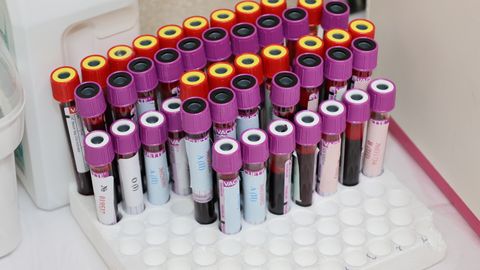
Patients now routinely see their own results before anyone has explained them, which has been a genuine improvement in transparency and a substantial new source of alarm.
What a reference range is
Not a definition of health.
A reference range is generally derived from the central ninety-five per cent of results in a reference population, which means that by construction one person in twenty who is entirely well falls outside it.
Order ten unrelated tests on a healthy person and the probability that at least one comes back flagged is high — which is the statistical reason that broad untargeted testing generates so much unnecessary investigation.
Ranges also differ between laboratories because they differ between assays, which is why comparing a result from one lab against a range from another is meaningless.
Timing, which changes everything
Many hormones vary by the hour, the day of the cycle, or the season.
Cortisol follows a strong daily rhythm and peaks shortly after waking, so a level is uninterpretable without knowing the time it was drawn.
Testosterone is highest in the morning and declines through the day, which is why guidelines specify morning sampling, usually repeated on a second occasion before any diagnosis.
Female reproductive hormones vary enormously across the cycle, so progesterone and oestradiol are interpreted against the cycle day, and a mid-cycle luteinising hormone surge is a normal event rather than an abnormality.
Prolactin rises with stress, sleep, exercise and even the venepuncture itself, so a mildly raised result is commonly repeated under rested conditions before anything further is done.
Thyroid tests
The most commonly misread panel.
Thyroid stimulating hormone is produced by the pituitary and rises when the thyroid is underactive, which is counterintuitive: a high TSH generally means an underactive thyroid.
Free thyroxine indicates what the gland is actually producing.
Subclinical hypothyroidism — raised TSH with normal thyroxine — is common, frequently transient, and treatment is not automatic; guidance depends on the degree of elevation, symptoms, antibody status, age and pregnancy.
Thyroid antibodies indicate autoimmune thyroid disease and predict progression, and are not a diagnosis in themselves.
Non-thyroidal illness alters thyroid results substantially, which is why testing during an acute illness is generally avoided.
What affects results other than disease
A longer list than most people expect.
Medications, including hormonal contraception, steroids, some antidepressants, and biotin supplements, which interfere directly with several common immunoassays and have caused genuinely misleading thyroid and hormone results.
Acute illness, recent surgery, intense exercise and severe stress.
Fasting status for some tests and not others.
Pregnancy, which shifts many ranges substantially.
Extremes of weight, which alter binding proteins.
And laboratory factors including sample handling, which is why an unexpected result is frequently repeated before being acted upon.
Direct-to-consumer panels
Increasingly common and worth approaching carefully.
They test large numbers of analytes without a clinical question, which maximises the chance of an incidental abnormality.
They frequently use narrower "optimal" ranges that are marketing constructs rather than validated thresholds, which converts normal results into problems requiring a product.
And they generate results that a clinician must then interpret without the context of why the test was ordered, which is a poor starting point.
Testing is most useful when it answers a specific question raised by symptoms or risk, which is a genuinely different activity from screening broadly and looking for something.
What to do with a result
Ask what question the test was answering.
Ask whether the result changes anything, since a number that alters no decision is not useful information.
Ask whether it should be repeated, and under what conditions.
Look at trends rather than single points where possible, since the direction of travel is frequently more informative than one value.
And resist treating a number as the thing to be fixed, since the objective is a person who feels well rather than a panel within range.
The symptoms problem
Worth acknowledging, because it is where people get stuck.
Fatigue, weight change, low mood, poor concentration and reduced libido are the presenting symptoms of many hormonal conditions and also of sleep deprivation, depression, anaemia, chronic stress and ordinary life.
Which means normal hormone results do not mean nothing is wrong — they mean the explanation lies elsewhere, and that is the beginning of the investigation rather than the end of it.
General information only, not medical advice. Interpret blood results with a qualified clinician who knows your history — do not start or stop treatment based on a number alone.
Also by Dr Ayesha Quraishi
- Going to the doctor with something embarrassingEveryday Body
- Immunity, and what can and cannot be boostedEveryday Body
- Eyes, screens and what actually damages themEveryday Body
- Back pain, and what the evidence changedEveryday Body