Intimacy & Desire
Medication and sexual side effects
They are common, they are the leading unspoken reason people stop taking medication, and there are usually options.
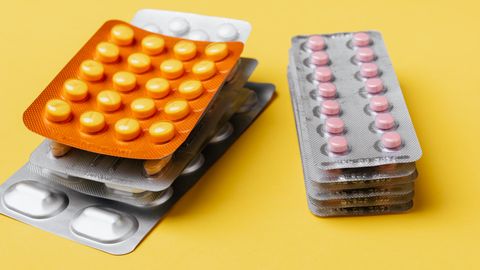
Sexual side effects are among the most common reasons for stopping a medication and among the least common reasons given to the prescriber.
Why it goes unmentioned
Patients assume the clinician will raise it and clinicians assume the patient will.
Studies comparing rates of sexual dysfunction reported spontaneously with rates found when patients are asked directly show a large difference — direct questioning finds much more.
Which means the true incidence is higher than the leaflet suggests for several drug classes, and that the conversation is being had far less often than it should be.
The consequence is people quietly stopping treatment for depression, blood pressure or prostate symptoms, with predictable results.
The classes most commonly involved
Antidepressants, particularly SSRIs and SNRIs, causing reduced desire, delayed or absent orgasm and, in men, erectile difficulty.
Rates in studies using direct questioning are high.
Some agents — bupropion, mirtazapine, vortioxetine, agomelatine among them — have notably lower rates, which makes switching a realistic option.
Antipsychotics, particularly those raising prolactin, which reduces desire and causes other endocrine effects.
Antihypertensives: beta blockers and thiazide diuretics are the classic offenders, while ACE inhibitors, angiotensin receptor blockers and calcium channel blockers are generally less problematic — which again makes substitution possible.
Finasteride and dutasteride, used for prostate enlargement and hair loss, with sexual side effects that in a minority of users are reported to persist after stopping, a contested and much-discussed phenomenon.
Hormonal contraception, where effects on libido are reported by some users and where the evidence at population level is mixed, which does not make an individual's experience less real.
Opioids, which suppress the hormonal axis substantially with long-term use.
Antihistamines, which reduce lubrication.
Anti-epileptics, chemotherapy agents, and hormonal treatments for cancer, where the effects are frequently significant and where support is frequently absent.
Disentangling drug from condition
Genuinely difficult and important.
Depression itself reduces libido and sexual function, so a person starting an antidepressant may improve or worsen sexually depending on which effect dominates.
Untreated hypertension and diabetes damage the vasculature and nerves involved in sexual response, so the underlying condition may be the larger contributor.
The useful question is about timing: symptoms beginning within weeks of starting or changing a drug point towards the drug, while symptoms preceding it do not.
The options
More than most people realise, and none of them involve simply stopping.
Waiting, since some effects diminish over the first months.
Dose reduction where clinically safe.
Switching within or between classes to an agent with a better profile.
Timing adjustments for some medications.
Adding an agent to counteract the effect, which has evidence in specific situations — for instance PDE5 inhibitors for antidepressant-associated erectile dysfunction.
Drug holidays, which are used occasionally and carry risks including discontinuation symptoms and relapse, so are a discussion rather than a self-directed strategy.
And treating any contributing condition, which frequently produces more improvement than adjusting the drug.
How to raise it
Since the barrier is usually the conversation.
Say it plainly and early in the appointment rather than at the door.
Be specific about what has changed — desire, arousal, orgasm, pain — because these have different causes and different solutions.
Say when it started relative to the medication.
State how much it matters to you, because a clinician weighing risks needs to know that this is significant rather than a passing mention.
And do not stop the medication before the conversation, particularly antidepressants, antipsychotics and cardiovascular drugs, where abrupt cessation carries its own risks.
For partners
Worth including.
A change in a partner's sexual response after starting medication is frequently interpreted as a change in feeling, and the person taking the medication is frequently too embarrassed to explain.
Naming the cause removes a large amount of unnecessary distress on both sides.
And the practical adaptations — more time, more direct stimulation, lubricant, less pressure on orgasm — help while the medical side is being sorted out.
General information only, not medical advice. Do not stop prescribed medication without consulting a qualified clinician.
Also by Dr Ayesha Quraishi
- Going to the doctor with something embarrassingEveryday Body
- Immunity, and what can and cannot be boostedEveryday Body
- Eyes, screens and what actually damages themEveryday Body
- Back pain, and what the evidence changedEveryday Body